“By 1760, the hunters of Nantucket had virtually exterminated the entire local population of cetaceans, but they cared little: they built larger whaling sloops and equipped them with brick furnaces capable of rendering blubber into oil on the open ocean. From then on, there was no longer a need to return to port as often to unload the blubber, and their fleet had a much wider range. By the beginning of the American Revolution, the people of Nantucket had reached the limits of the Arctic Circle. They had reached the west coast of Africa, the east coast of South America, and as far as the Falkland Islands.”
Excerpt from
In the Heart of the Sea: The Tragedy of the Whaleship Essex
Nathaniel Philbrick
The Faroe Islands, the grindadráp, and what I hadn’t anticipated
I’m not going to pretend to be neutral.
If I’m writing about the Faroe Islands, it’s because I went there with an inner tension that I never quite managed to resolve.
These islands, I wanted them.
For their light—or rather its absence.
For their isolation, their almost unreal quality.
Because I photograph, and I’m drawn to that sensation of the raw north that I often try to capture.
But there was the grindadráp.
The grindadráp, impossible to ignore
One can try to look away, to rationalize, to contextualize.
One can read that it’s a tradition, that it goes back a long way, that it once had vital meaning.
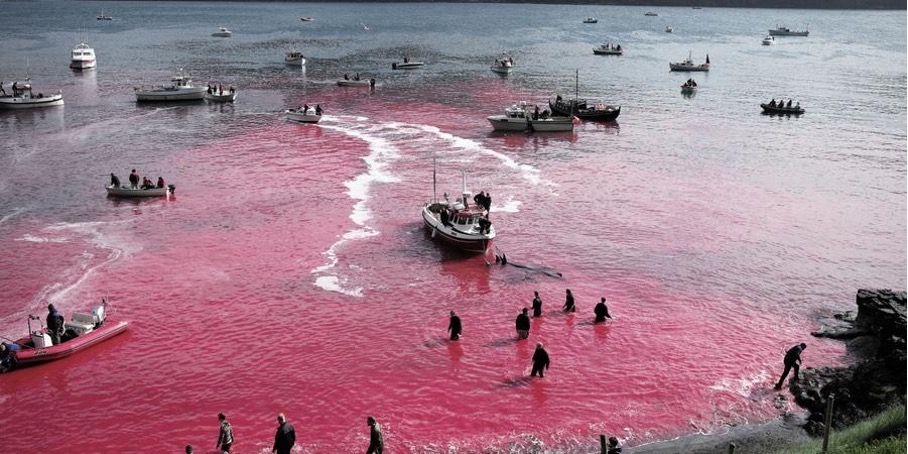
But when you really look at what it is—a collective hunt of pilot whales driven into a bay—
you can’t entirely pretend it’s just another cultural detail among others.
It’s not an abstract debate.
It’s something very concrete, very visual, very difficult to forget.
The arrangements I made with myself
Before leaving, I tried to tame this unease.
To give it an acceptable shape.
I told myself that other countries also continued to hunt cetaceans—like Japan or Norway—without it prompting any real renunciation.
I told myself that this practice probably belonged to a world in the process of fading away.
That time, slowly, would do its work.
So I let these ideas settle in, one by one, like stacking fragile justifications.
Nothing truly solid, nothing completely honest either.
But it was enough. Enough to go.
There: beauty, without question
And yes, it’s true.
The beauty of the Faroe Islands is difficult to describe without falling into clichés.
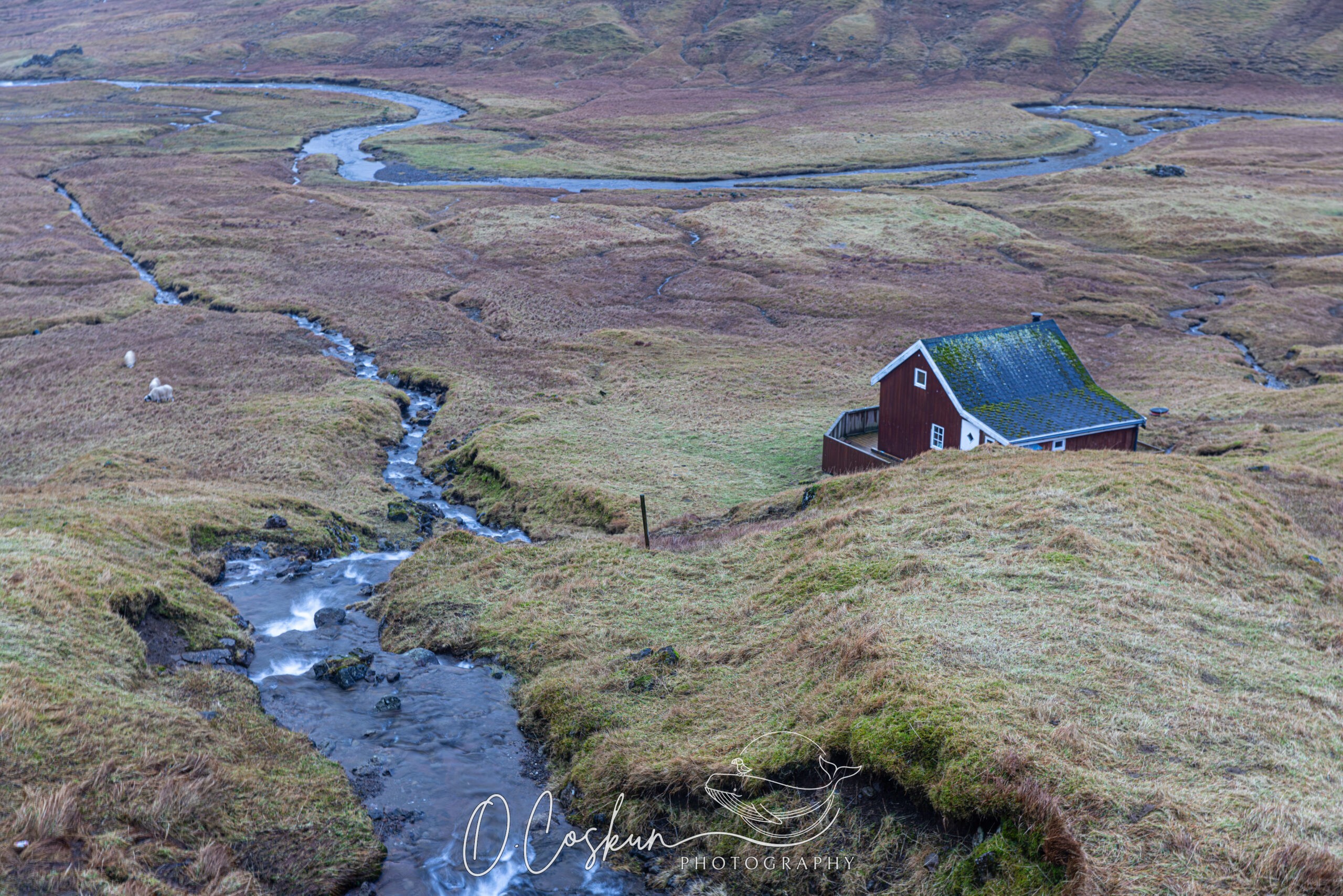
It’s a rugged beauty, unstable, almost hostile at times.
There’s something profoundly alive in these landscapes.
Something that doesn’t seek to seduce.
And the grindadráp remains in the background, abstract.
Not visible.
I went there at Christmas.
The night was long.
The problem is coming back.
The images return. The ones we’d seen before. The ones we see again afterward, sometimes by chance.
And there, there’s no filter anymore.
What struck me wasn’t just the practice itself, but the disconnect. How can something so brutal coexist with an environment so pure, almost seemingly untouched? As if two irreconcilable realities were sharing the same shore.
One can understand the harshness of past centuries, imagine the cold, the isolation, the necessity. But how has this violence traveled through time? How has it survived the seasons, the generations, only to arrive, intact, in our present?
I thought I could compartmentalize.
I was wrong.