“He kept hens and put eggs in a basket on a flat stone next to the road each morning. Customers left money in an honesty box, so there was no need for them to come to the house. ” Anne CLEEVES, The Lonely Man.
— Free eggs? What’s that? Do you think they’re free?
— No idea. Don’t you want to go and see?
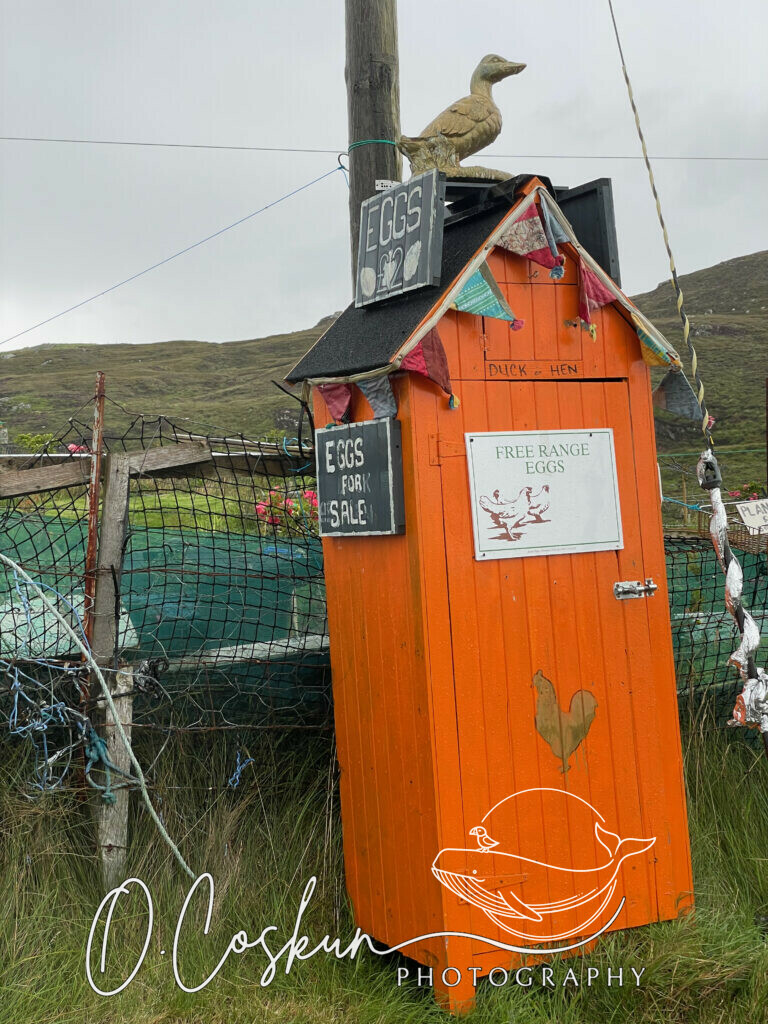
The Scottish rain won’t stop her.
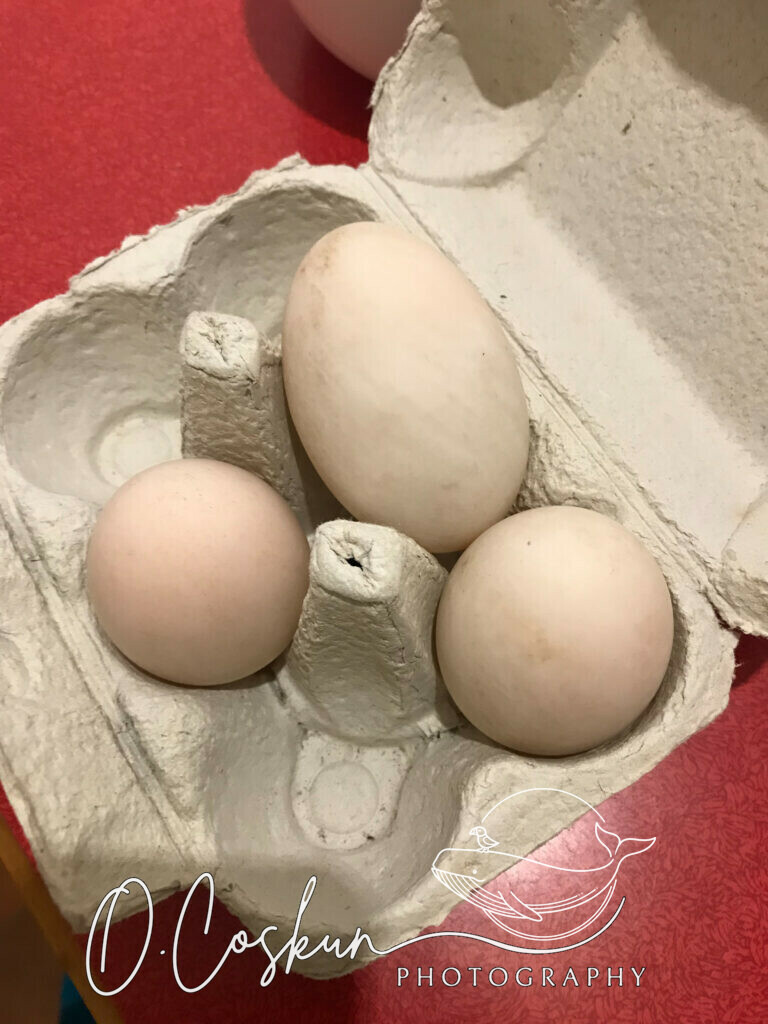
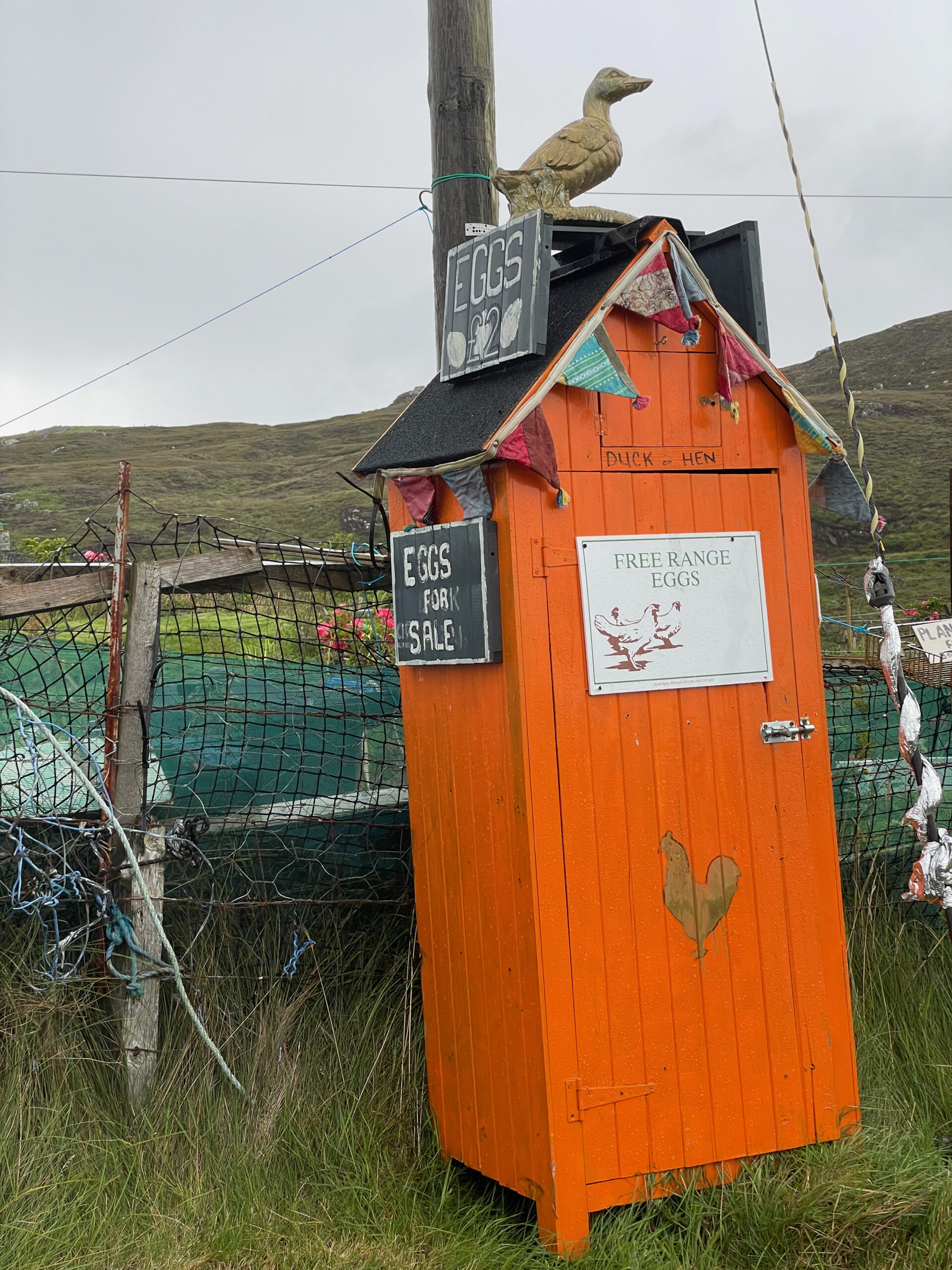
She gets out of the car, crosses to the box set at the roadside, stands there for a moment. She comes back with a small carton: duck eggs. There were the eggs and a price, she says. I left the money, I took the box. There was also a courgette.
She shows me the eggs. They’re large — larger than I’d imagined. It’s the first time I’ve seen any.
We’ll eat them tonight.
We’ll come across many more of these boxes, from one archipelago to another. A crate on a flat stone, a table under a tin shelter, sometimes an entire hut turned into a shop — wools, pottery, hand-painted cards — and no one inside. The prices are handwritten. A box awaits the money, with change available if needed.
The honesty box comes from a very simple rural practice: selling farm or garden surplus by the roadside, without keeping a shop or paying someone to serve. In small communities where everyone more or less knows everyone else, trust isn’t a virtue on display. It’s a practical solution.
The system is not exclusively Scottish: it was found throughout the British countryside and in the Channel Islands. Farms attest to these payment-box stalls as early as the 1950s-1960s, and the practice is probably older. Sources don’t allow us to date the first one: it was so ordinary that it was neither archived nor photographed. Mundane things leave few traces (Honesty Stall – history of the practice).
In the Highlands and islands, it endured because it fitted life here: scattered farms, rare shops, long journeys, seasonal production, tight-knit neighbourhoods. They mostly sell eggs, potatoes, vegetables, flowers, honey, jams. Today the box is sometimes padlocked, and a QR code sits alongside the coins (Map and description of Scottish honesty boxes).
During lockdown, these stalls experienced a revival — contactless shopping, supporting small producers, maintaining a connection between residents. Some boxes were used to leave gifts, or notes.
(https://www.scottishislandgifts.com/honesty-boxes-of-the-scottish-islands/)
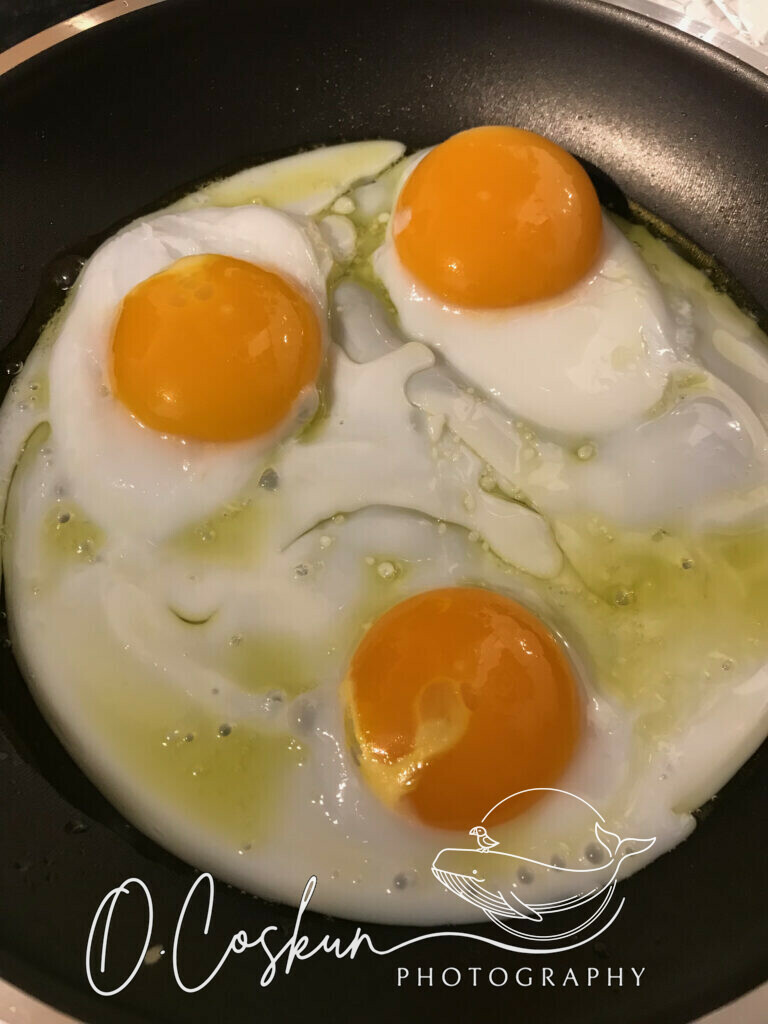
That evening, in a small flat in Lerwick overlooking a stepped alley, we cracked open the duck eggs. The yolk was denser, almost orange.